Viral Harrier EV Beach Mishap Shows Why 2WD EVs Aren’t Built For Adventure Yet
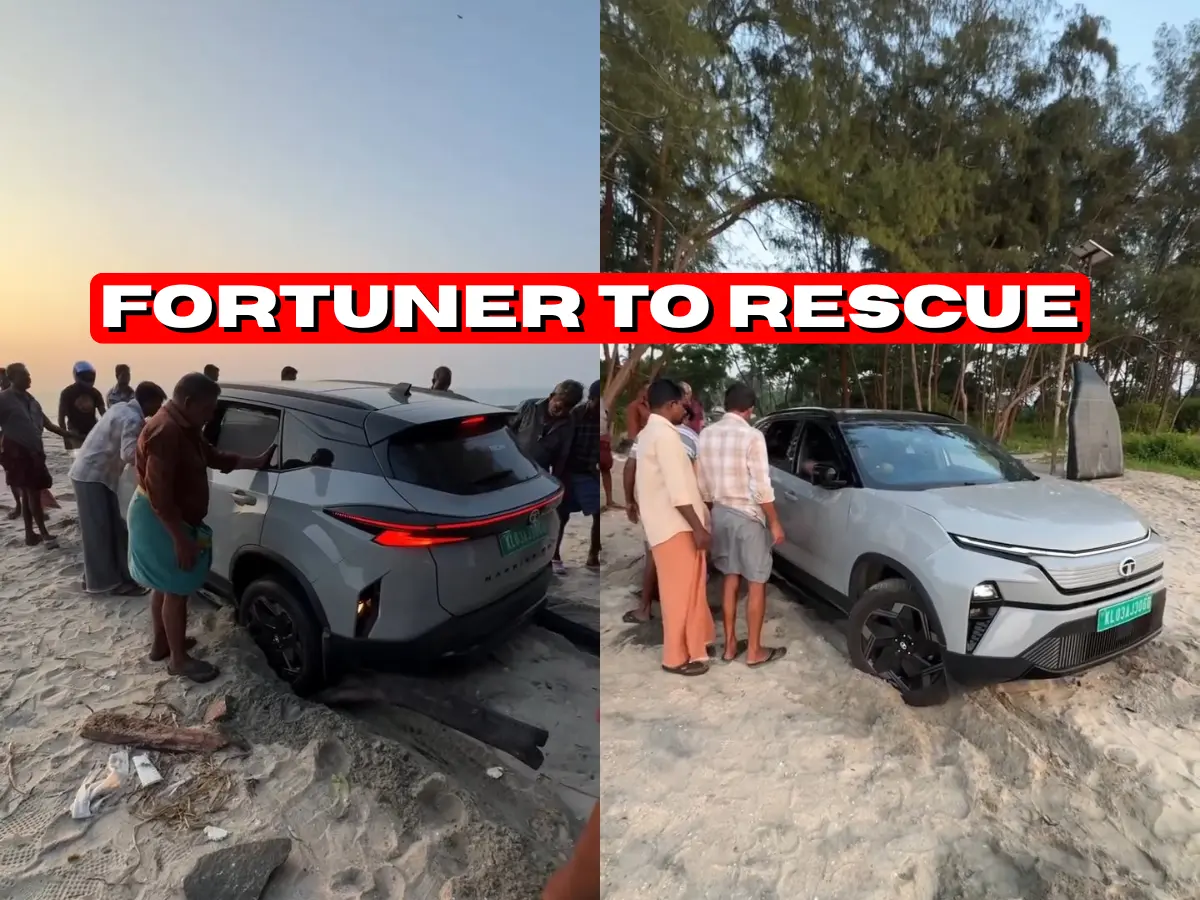
A recent beach rescue involving a Tata Harrier EV has sparked a nationwide conversation about how electric SUVs behave in real-world off-road situations. The viral clip shows a 2WD Harrier EV dug deep into soft sand before a Toyota Fortuner 4×4 eventually pulls it to safety. While the visuals are dramatic, the underlying engineering story is far more revealing for India’s fast-growing EV audience.
What Really Happened On The Beach
The Harrier EV seen in the video was a rear-wheel-drive variant attempting a casual drive across wet sand. Within seconds, the heavy rear end began sinking. Once an EV loses momentum on loose terrain, recovery becomes extremely difficult because of its weight distribution and limited wheel control.
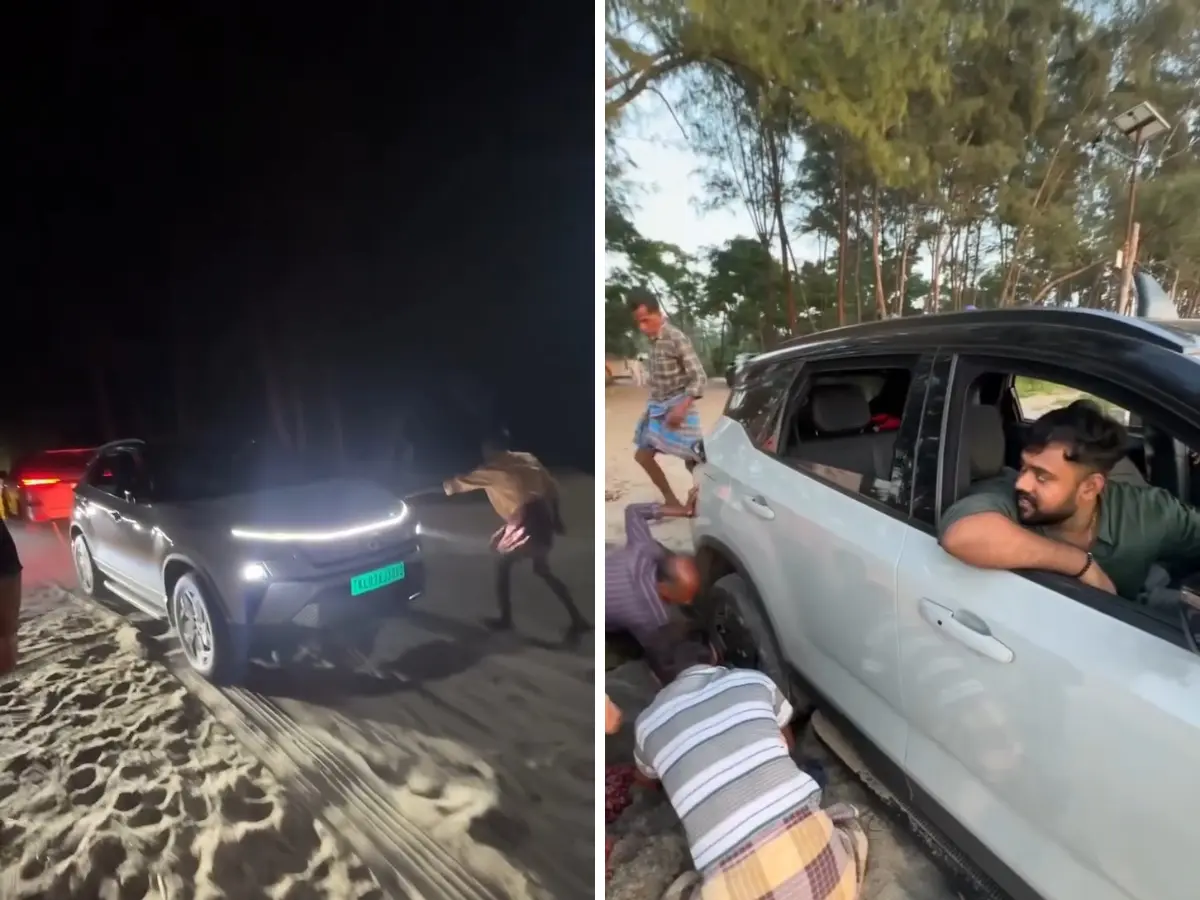
The driver tried to power out of the situation, but instant electric torque only made the wheels dig deeper. Locals tried laying planks and digging around the tyres, but the vehicle barely moved. Hours later, a Fortuner 4×4 arrived with a tow rope and pulled the Harrier EV out in one smooth attempt.
Why 2WD EVs Sink Faster In Sand
Unlike ICE SUVs, electric SUVs carry a large battery pack under the floor, adding several hundred kilos directly to the car’s belly. That weight acts like an anchor on soft surfaces. In the Harrier EV’s RWD version, both the motor and battery load the rear, making the wheels sink quickly.
On sand, this has two major consequences:
- The rear wheels lose traction almost instantly.
- The heavy underbody settles into the surface, reducing any chance of regaining motion.
This is not a Tata-specific issue. It’s physics. Nearly all 2WD EVs struggle in sand unless they have all-wheel drive or terrain-focused software.
Why The Fortuner Pulled It Out Effortlessly
The Toyota Fortuner involved in the rescue was a traditional diesel 4×4. With low-end torque, high ground clearance and four driven wheels, it was built for exactly this situation. Sand driving requires controlled power delivery and continuous traction, something ladder-frame 4x4s excel at.
In contrast, EVs deliver torque immediately, which helps on roads but becomes a disadvantage on loose surfaces because the wheels spin before they grip.
What This Means For India’s New EV Buyers
As EV adoption grows, more buyers assume electric SUVs can handle the same adventure duties as conventional SUVs. But drivetrain differences matter. A 2WD EV, even a premium one, behaves very differently once you leave tarmac.
For buyers planning beach drives, dunes or hilly trails, an AWD or 4×4 EV is essential. Tata’s upcoming Harrier EV QWD variant has already shown impressive capability in other clips, including river crossings and steep climbs. But lower 2WD variants are built primarily for city and highway use, not off-road exploration.
The Bigger Lesson From This Viral Clip
The incident isn’t about blaming the Harrier EV or glorifying the Fortuner. It’s a reminder that powertrains behave differently and terrain demands respect. EVs are excellent daily vehicles, but not all are adventure-ready.
As India’s EV market expands, understanding these distinctions will help buyers choose the right configuration for their lifestyle. And for now, the safest rule remains simple: avoid beaches and dunes unless your SUV is equipped with the right drivetrain and you know how the terrain reacts under tyre pressure and weight.
For urban use, the Harrier EV remains one of the most advanced electric SUVs in the country. But when it comes to sand, physics still favours old-school 4x4s like the Fortuner.
