Tata’s Biggest EV Upgrade Yet: Sierra.ev, Punch.ev and Avinya Confirmed for 2026 Launch
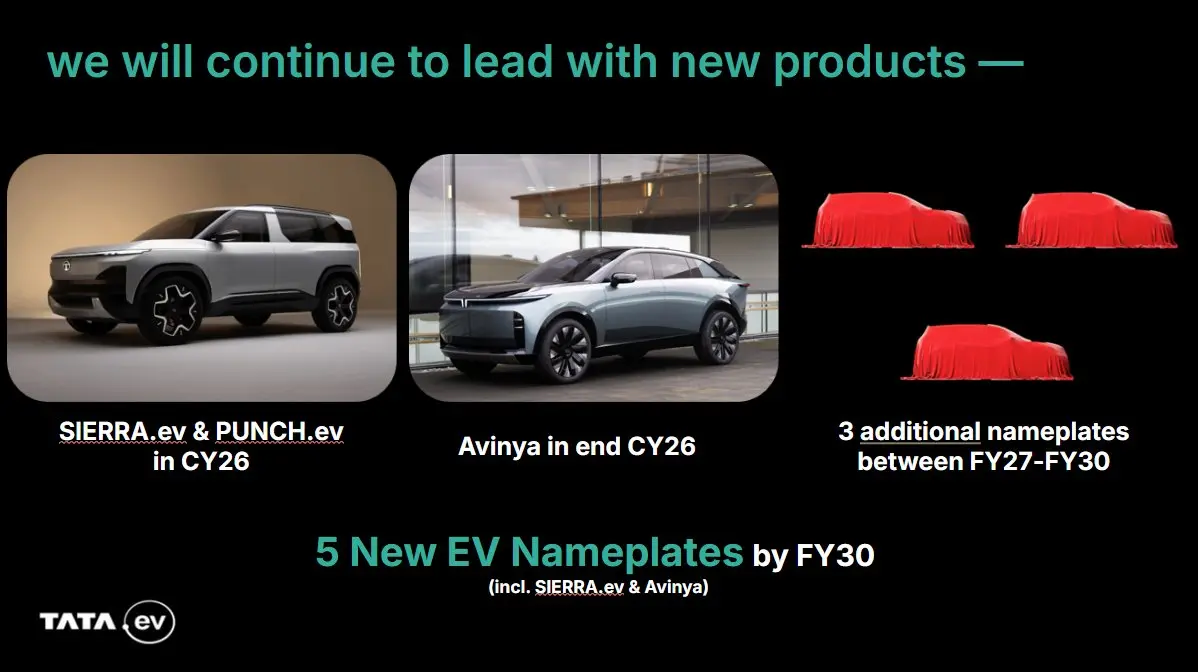
Tata Motors is stepping into 2026 with its most ambitious electric strategy to date. After dominating the entry and mid-range EV space, the company is preparing a multi-pronged attack that stretches from mass-market buyers to India’s premium EV audience. The confirmation of three major launches in 2026 marks not just new products, but a reset of Tata’s EV roadmap.
Why This Announcement Matters
Tata has already crossed 2.5 lakh EV sales in India, and one out of every four Tata EV owners is a first-time car buyer. That shift in buyer behaviour signals something important. Indians aren’t just adopting EVs because of rising fuel costs, they are now trusting homegrown brands with next-gen mobility.
By confirming the Sierra.ev, Punch.ev and the first Avinya model for 2026, Tata is signalling the start of a new EV chapter. One that is broader, more technologically advanced and spread across more segments than ever before.
Sierra.ev and Punch.ev: Strengthening the Core

The Sierra.ev will enter the midsize EV SUV category with RWD and AWD options. Built on the acti.ev+ platform, it borrows the charm of the ICE Sierra while fully embracing EV-first design cues. It’s expected to strengthen Tata’s presence in the heart of India’s SUV market.
The updated Punch.ev, on the other hand, will continue as Tata’s most accessible electric SUV. With a facelift mirroring its ICE sibling, the model is aimed at upgrading design and features without losing its affordability appeal.
Together, these launches plug the gaps between the Tiago.ev, Tigor.ev, Nexon.ev, Curvv.ev and Harrier.ev, creating one of the most complete EV lineups in the country.
Avinya: Tata’s Leap Into Premium EV Territory

The biggest shift comes with the Avinya brand. Positioned above Tata’s current EVs, it will introduce the Gen 3 skateboard platform. This architecture allows more space, range and performance, creating room for genuinely premium electric SUVs.
The first Avinya model arrives by the end of 2026, marking Tata’s entry into a segment currently led by global players.
What Comes After 2026
Tata will add three more EV nameplates between FY27 and FY30, possibly expanding the Avinya family further. The company’s rapid charging infrastructure growth plan also supports this expansion, with 400,000 chargers targeted by 2027 and 1 million by 2030.
What 2026 shows us is clear. Tata isn’t just following India’s EV shift. It wants to lead it, shape it and set the benchmarks for what an Indian EV future should look like.
