GNCAP Reveals India’s 7 Most Unsafe Cars (Full List)
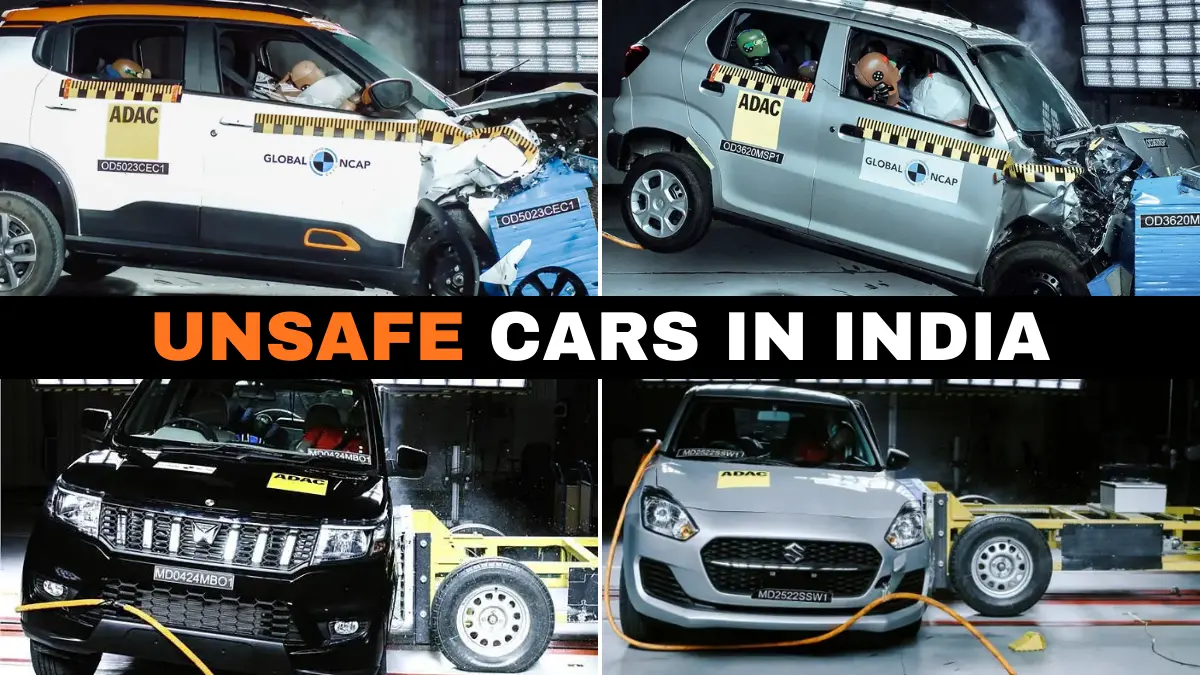
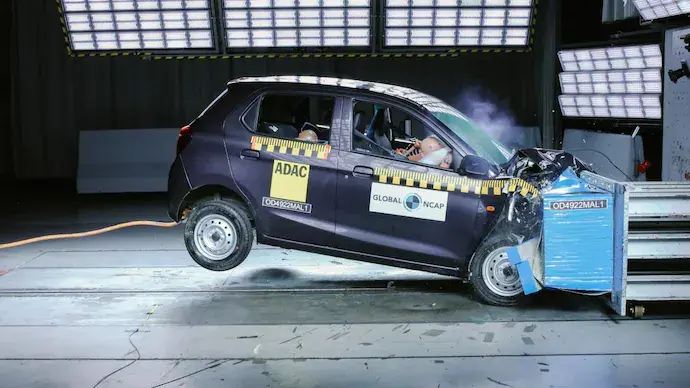
Crash tests in India have changed the way buyers evaluate cars, and GNCAP’s results make one thing clear: some of the most popular models on the road offer worryingly low protection. Many of these cars rely on airbags and features to appear safe, but their structure tells a different story. When a bodyshell collapses in a crash, no number of airbags can fully protect the occupants.
Why Structure Matters More Than Airbags
A strong structure forms the foundation of a safe car. If the bodyshell is unstable, the dashboard, pedals and steering column can intrude into the cabin during a crash. Airbags can only work properly when the car maintains its shape. A stable structure, paired with seatbelts and airbags, is far safer than a weak frame with multiple airbags.
Citroen eC3 (0 Stars Adult, 1 Star Child)
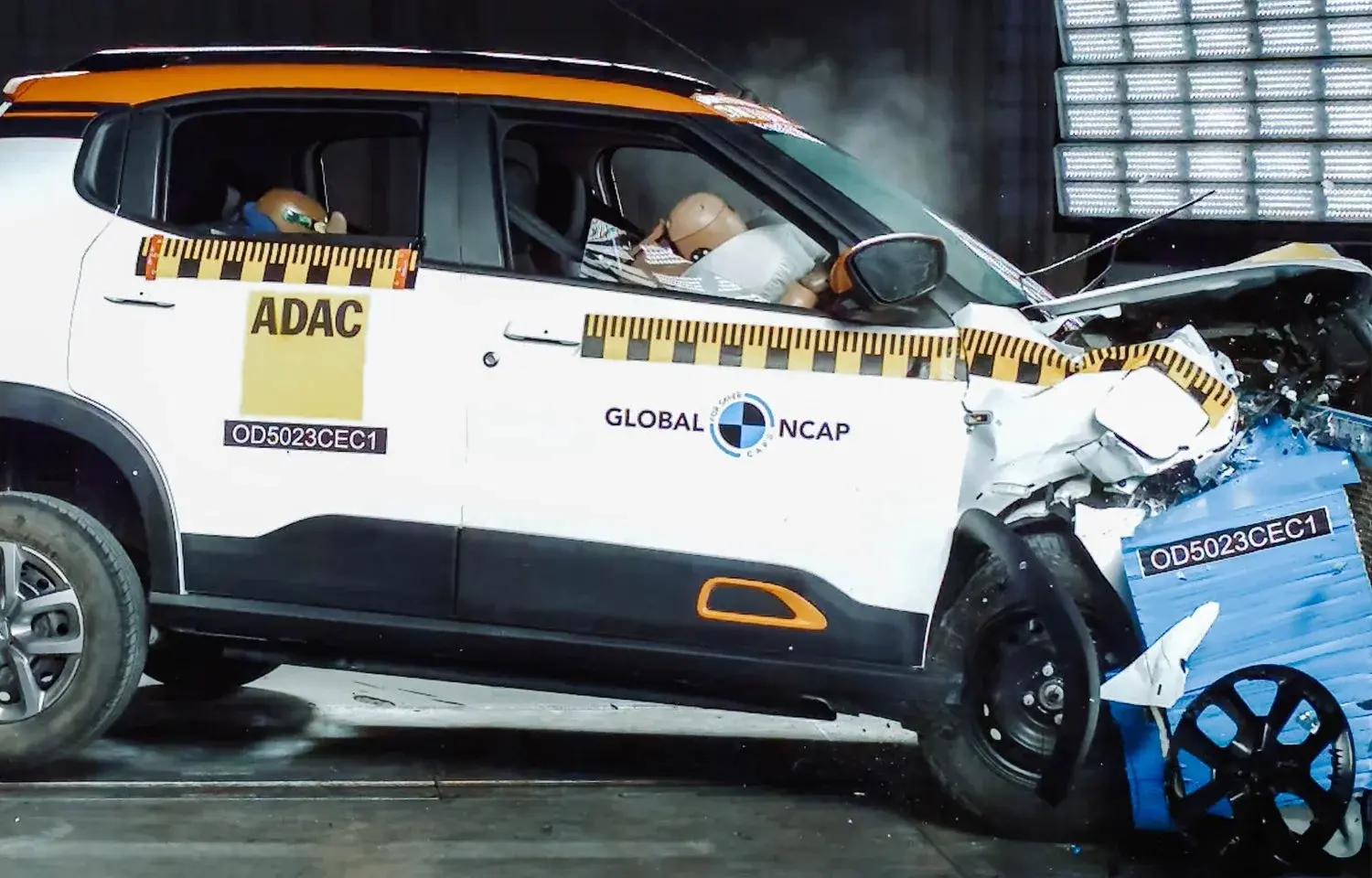
GNCAP’s 2023 test of the Citroen eC3 was a reminder that modern EVs aren’t automatically safe. The structure was rated unstable, with significant deformation during impact. Protection for the driver’s chest and knees was weak, raising concerns about real-world crash performance. Despite its tech-focused appeal, the eC3’s zero-star adult rating shows a major gap in fundamental safety.
Safer Alternative: Tata Punch.ev or Tata Nexon.ev, both 5-star BNCAP-rated.
Maruti Suzuki S-Presso (1 Star Adult, 0 Star Child)
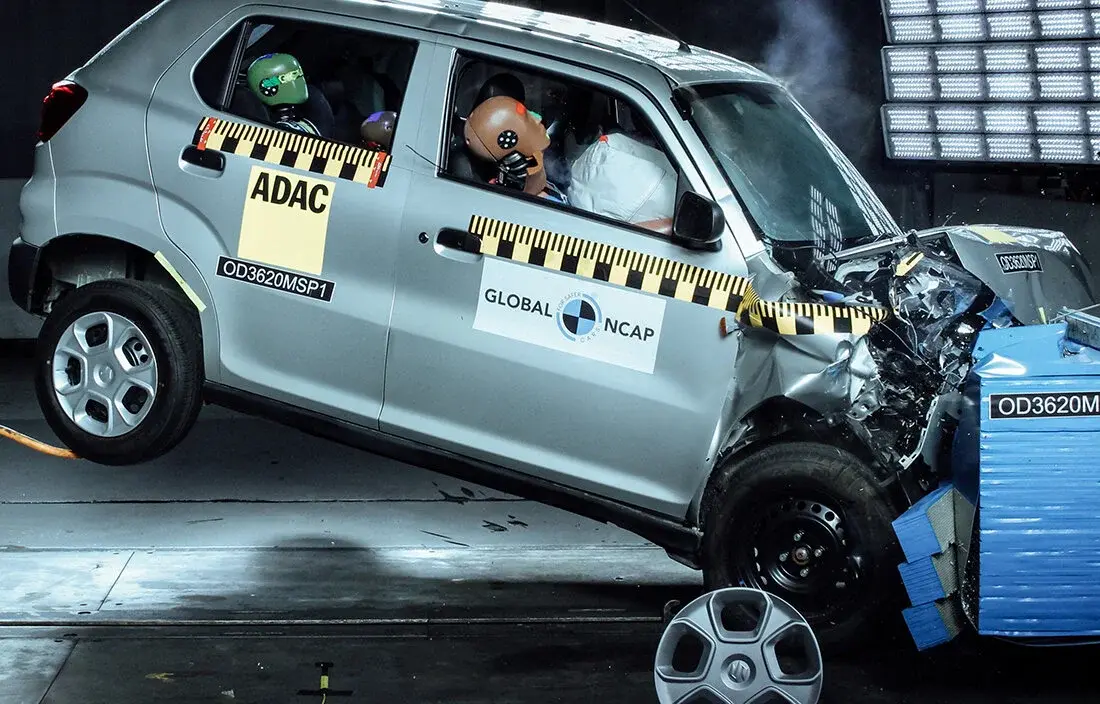
The S-Presso’s 2023 crash test revealed a highly unstable bodyshell, which compromised the safety of both front occupants. Chest protection was poor, and child safety performance was among the lowest recorded. Its tall stance and micro-SUV positioning do little to improve core structural strength. For families, this low rating makes it a risky proposition.
Safer Alternative: Tata Punch with a proven 5-star GNCAP rating.
Maruti Suzuki Wagon R (1 Star Adult, 0 Star Child)
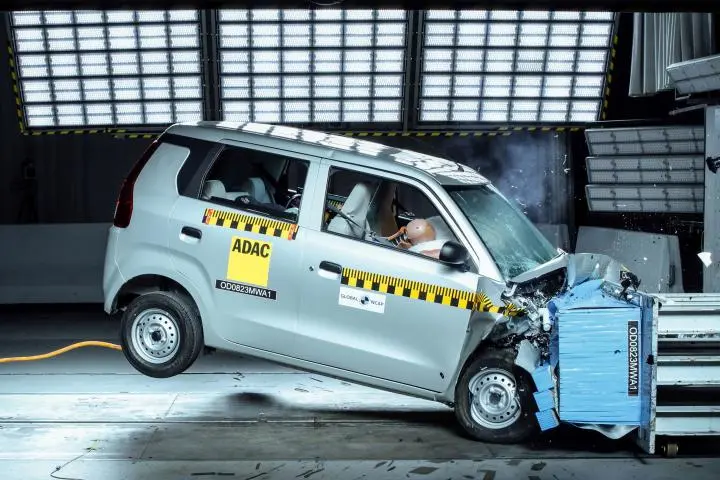
Despite being one of India’s best-selling cars, the Wagon R scored poorly in GNCAP tests. Its structure was rated unstable, and the driver’s chest protection was weak, increasing injury risk in frontal impacts. The tall-boy design prioritises space but not crash energy absorption. Popularity does not always equal safety, and the Wagon R is a prime example.
Safer Alternative: Tata Punch or Hyundai Exter.
Maruti Suzuki Ignis (1 Star Adult, 0 Star Child)
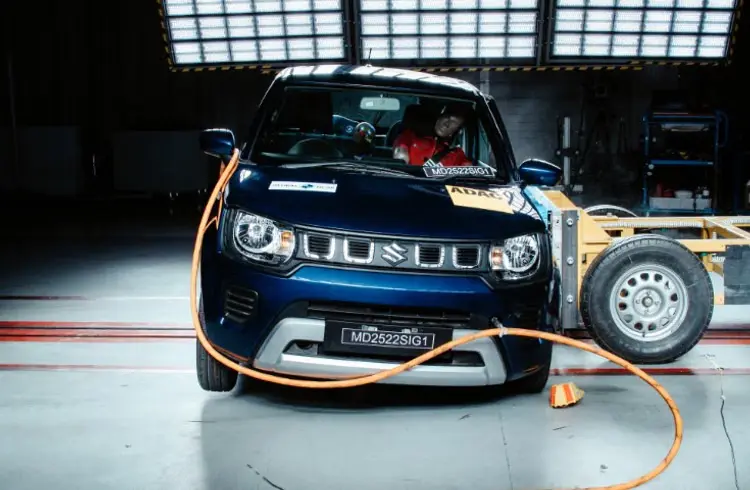
Marketed as a premium Nexa product, the Ignis underperformed in its 2022 GNCAP test. The car showed weak chest and knee protection for the driver, and the bodyshell was deemed unstable. Child occupant protection was also poor, making it unsuitable for small families. Its quirky design cannot compensate for these structural concerns.
Safer Alternative: Tata Tiago or Tata Punch.
Renault Kwid (1 Star Adult, 1 Star Child)
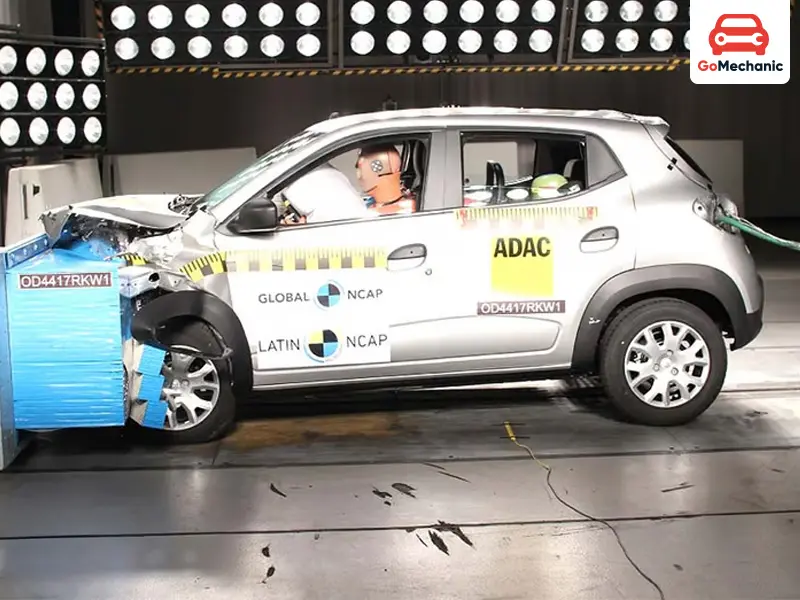
The Kwid’s 2022 test exposed weak chest protection and an unstable structure, both critical indicators of poor crashworthiness. While affordable and popular among first-time buyers, its safety compromises are significant. The energy absorption of the frame is limited, transferring higher forces to occupants. It remains one of the lower-performing hatchbacks in its segment.
Safer Alternative: Tata Tiago.
Maruti Suzuki Swift (1 Star Adult, 1 Star Child)
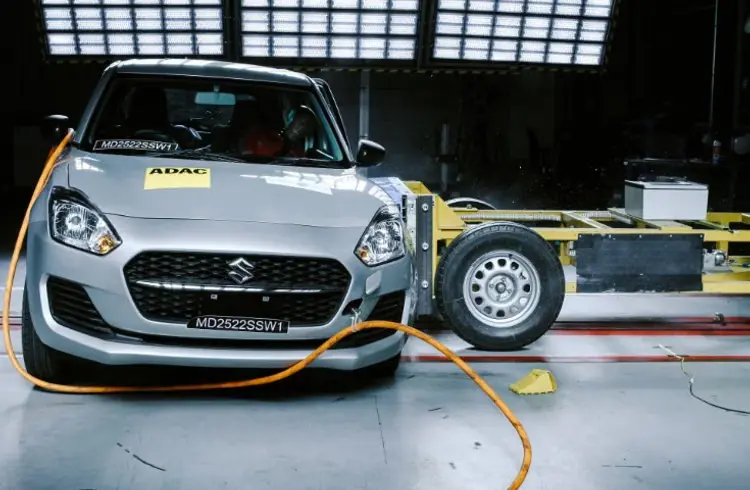
The Swift’s crash test results were disappointing for such a popular hatchback. GNCAP noted an unstable structure and footwell area, raising injury risks to the legs and chest. Despite its fun-to-drive character, the underlying safety remains below modern standards. Buyers should weigh these risks carefully, especially when considering family use.
Safer Alternative: Tata Altroz, a 5-star BNCAP-rated hatchback.
Mahindra Bolero Neo (1 Star Adult, 1 Star Child)
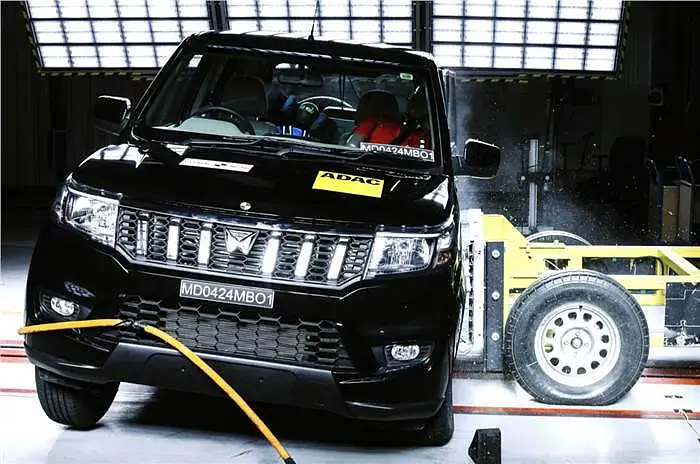
Although marketed as a rugged SUV, the Bolero Neo’s structure did not hold up well in GNCAP testing. The bodyshell and footwell area were rated unstable, with high forces recorded on the driver’s chest and legs. Its body-on-frame construction did not translate to superior safety. Discounts on older stock may tempt buyers, but the low rating presents a real-world risk.
Safer Alternative: Mahindra XUV300 or Tata Nexon.
Other Low-Rated Models to Be Aware Of
Some models did not appear in the main seven but still recorded concerning crash-test outcomes.
Maruti Suzuki Alto K10 (2 Stars Adult, 0 Stars Child)
The Alto K10 scored two stars for adults but zero for child protection, primarily due to poor child restraint performance. Lack of three-point seatbelts for all occupants adds to the risk. For India’s most affordable car, these safety gaps are hard to ignore.
Safer Alternative: Tata Tiago.
Hyundai Grand i10 Nios (2-Airbag Model)
The two-airbag variant of the Grand i10 Nios scored two stars in GNCAP testing, with an unstable bodyshell and weak chest protection. African NCAP’s later zero-star rating added further concern. While newer variants get six airbags, structural safety remains a key question.
Safer Alternative: Tata Altroz.
BNCAP vs GNCAP: What’s the Difference?: What’s the Difference?
BNCAP focuses on Indian road conditions and tests locally sold models at 64 km/h for frontal offset and 50 km/h for side impact. GNCAP uses stricter global protocols and includes pedestrian protection. Cars like the Tata Punch have performed strongly in both systems, showing the value of robust engineering.
Which Cars in India Have 5-Star GNCAP Ratings?
Models such as the Tata Punch EV, Tata Nexon, Mahindra XUV700 and Volkswagen Virtus have achieved five stars in GNCAP tests. These cars offer stronger protection for both adult and child occupants, making them better long-term choices.
Verdict
A car’s safety is defined by its structure, not just features. GNCAP ratings reveal that even popular models can underperform in crash tests. Buyers in India should prioritise strong crash results and stable structures when choosing their next car.
