Indian Developer Builds AI Helmet to Catch Traffic Rule Breakers
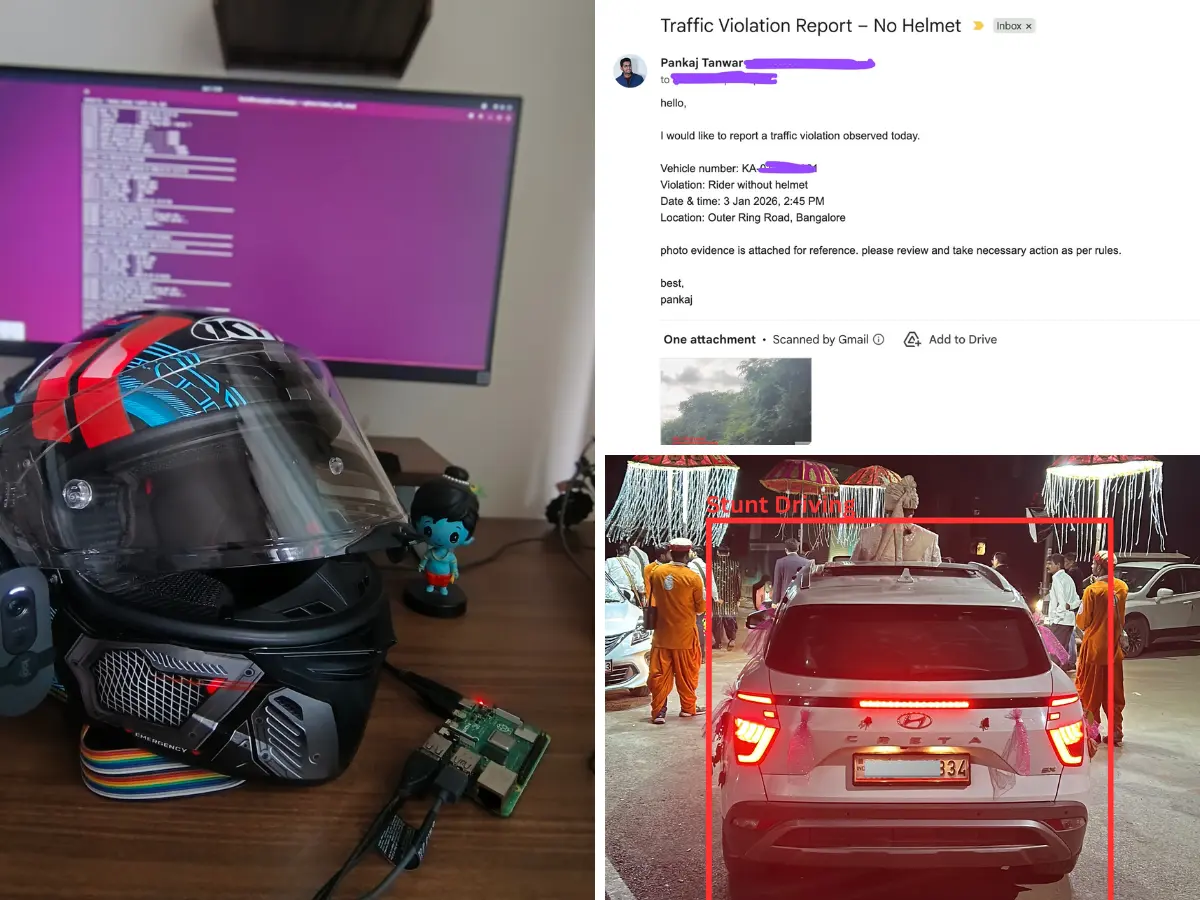
India’s traffic problem has inspired countless complaints, but rarely a working solution. That’s what makes a helmet-mounted AI system built by an Indian developer stand out. Instead of waiting for better enforcement, he decided to create his own version of a traffic cop powered by code.
The AI-enabled helmet uses a camera and software to detect common violations on the road. It can capture visual proof, tag the image with time and location data, and potentially send it directly to authorities. The idea is simple: automate what human enforcement struggles to scale.
What makes this development interesting isn’t just the technology, but the context. India’s traffic policing is often understaffed, inconsistent, and reactive. An automated system like this exposes a deeper truth—discipline improves not when rules exist, but when enforcement becomes unavoidable.
The online reaction has been mixed. Some see it as a much-needed innovation, while others worry about privacy, misuse, and legal grey areas. There are also real questions around data storage, government approval, and whether such tools could ever be officially adopted.
Still, the helmet AI highlights a growing trend: citizens using technology to solve systemic problems. Whether it becomes a product, a pilot, or just a conversation starter, it forces policymakers to confront an uncomfortable reality—technology is moving faster than traffic reform.
If nothing else, it proves one thing. India’s traffic crisis isn’t short on ideas. It’s short on execution.
