India-Made Baleno Fails Latin NCAP: Should Indian Buyers Be Worried?

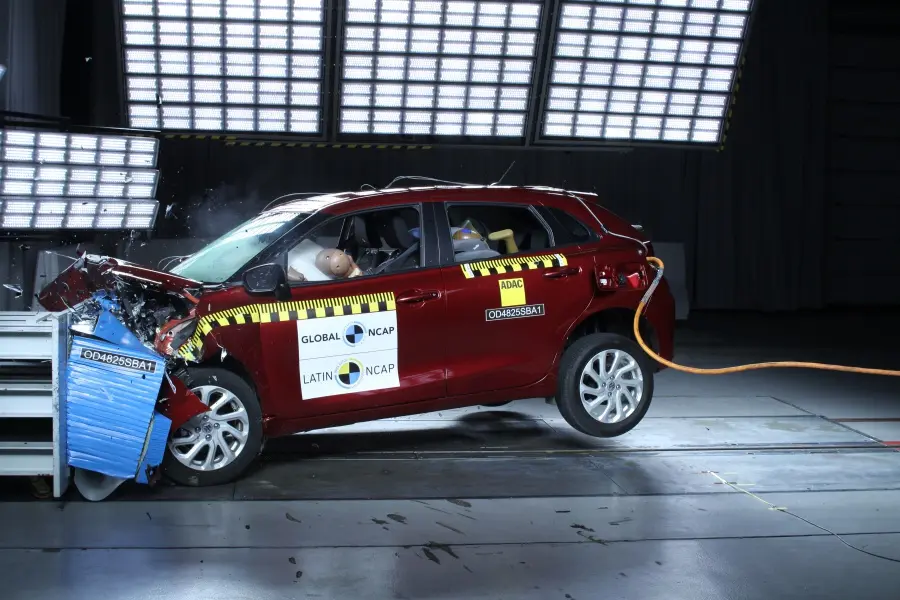
The Suzuki Baleno’s one-star Latin NCAP rating has sparked fresh debate about how safe mass-market hatchbacks really are once they leave Indian showrooms. While the model tested was for Latin America, its Indian origins make the findings impossible to ignore.
Latin NCAP’s new-age protocols pushed the Baleno harder than ever, and the base two-airbag variant failed to protect adult occupants effectively in side impacts. The structure held up well in frontal tests, but the weak chest protection in side impact exposed a gap that budget cars still struggle to fill.
What’s interesting is how quickly Suzuki reacted. After Latin NCAP chose to test the two-airbag version, the company standardised six airbags in the region. The upgraded model jumped to two stars, proving that basic hardware upgrades can dramatically improve survivability.
For Indian buyers, the takeaway isn’t that the Baleno sold here is unsafe. Instead, it highlights how safety equipment changes from market to market and why India’s own testing ecosystem must evolve at the same pace as global protocols. As 2026 brings tougher norms internationally, the pressure on Indian automakers to modernise platforms, add more protection, and aim for global ratings will only increase.
Safety is no longer a premium feature. The Baleno’s results underline that it’s becoming a baseline expectation across markets.
