Hyundai Nexo’s 5-Star Euro NCAP Rating Raises a Bigger Question: Is Hydrogen the Next Frontier for India?
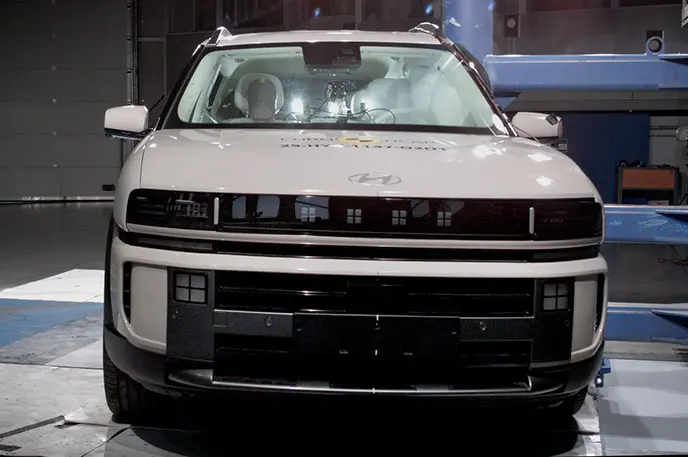
Hyundai’s Nexo achieving a five-star Euro NCAP rating may look like just another safety headline at first glance. But beneath the crash-test data lies a far more important story, one that goes beyond a single SUV or a European safety badge.
This result quietly reinforces a message the Indian auto industry has been reluctant to confront. Electrification will not be limited to battery-powered vehicles alone. Hydrogen fuel-cell technology is being developed with the same seriousness, safety standards and long-term intent.
Why This Safety Rating Matters More Than Usual
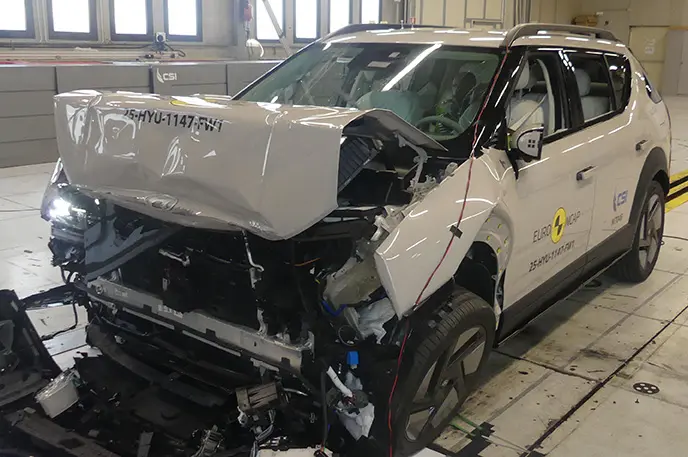
Fuel-cell electric vehicles still sit on the fringes of global adoption. Questions around infrastructure, cost and practicality often dominate the discussion. Safety, however, is rarely the concern buyers voice out loud, largely because there is so little real-world data.
The Nexo’s performance under the latest Euro NCAP protocols addresses that gap directly. Achieving high scores across adult protection, child safety, driver assistance and vulnerable road user protection shows that hydrogen-powered vehicles can meet, and even match, the safety benchmarks set by modern EVs and ICE SUVs.
For a technology that stores high-pressure hydrogen on board, this is a critical trust-building moment.
Structural Engineering Over Marketing Claims
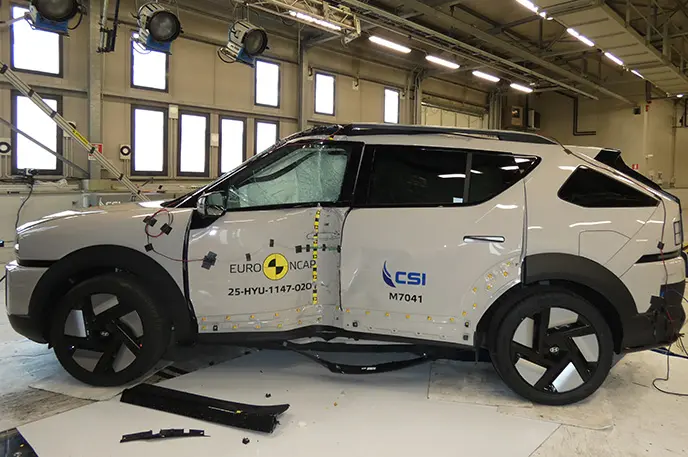
Euro NCAP testing rewards structural integrity over feature lists. In the Nexo’s case, the cabin remained stable during frontal and offset collisions, allowing the restraint systems to work as intended. Injury readings for key body areas stayed within safe thresholds for both front occupants.
Side-impact and lateral collision results were particularly strong, helped by effective energy management and well-calibrated airbags. The inclusion of a centre airbag also reduced the risk of occupants colliding with each other in secondary impacts, a scenario often overlooked in conventional testing discussions.
These results underline Hyundai’s engineering-first approach rather than reliance on electronic aids alone.
Child Safety and Real-World Scenarios
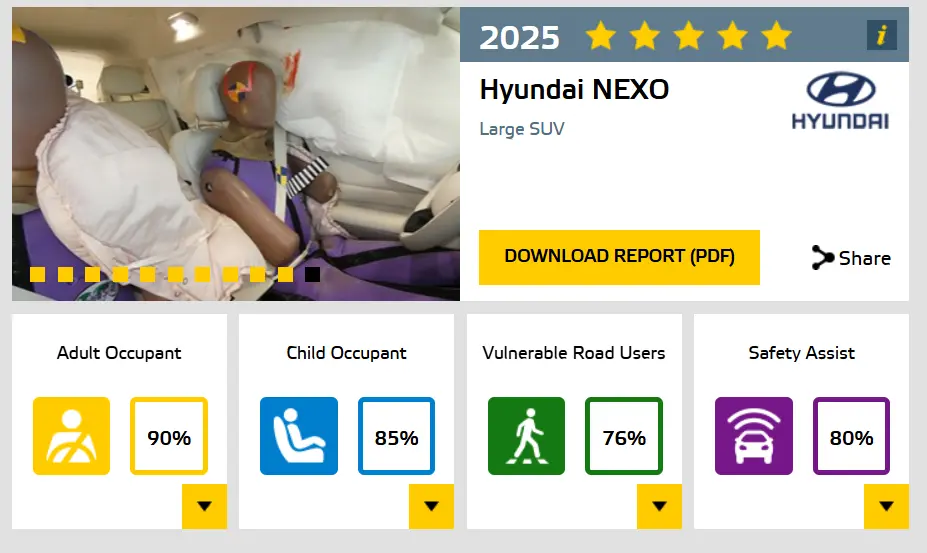
Child occupant protection emerged as one of the Nexo’s strongest areas. Dummy tests representing six- and ten-year-old passengers showed consistent protection across frontal and side crashes.
Clear airbag deactivation warnings, proper child-seat compatibility and robust ISOFIX anchoring systems may sound routine, but their correct implementation is what separates average performers from top scorers.
Euro NCAP also factored in post-impact systems such as automatic emergency calls, measures to prevent secondary collisions and even safe exit functions in water submersion scenarios. These are features designed for real-world emergencies rather than brochure appeal.
What This Means for India
Hyundai has already indicated that it is actively studying the feasibility of fuel-cell technology for India. The Nexo’s safety credentials strengthen the business case internally, even if market readiness remains a challenge.
India’s hydrogen roadmap is still at a policy and pilot-project stage. Infrastructure is sparse, costs are high and public awareness is limited. But safety validation removes one major unknown from the equation.
If and when hydrogen infrastructure begins to take shape, manufacturers with proven, certified products will have a significant head start.
A Long-Term Signal, Not a Short-Term Launch Teaser
It would be premature to view the Nexo’s Euro NCAP success as an immediate India launch indicator. Instead, it should be seen as a long-term signal of Hyundai’s technology depth.
Just as the brand used global EV platforms to prepare Indian consumers for electric mobility, hydrogen could follow a similar path, initially through fleet use, government partnerships or limited pilots before mass adoption.
The Bigger Takeaway
The Nexo’s five-star rating is not just about how well a hydrogen SUV performs in a crash. It represents the maturity of alternative propulsion technologies reaching parity with mainstream safety expectations.
For India, the message is subtle but clear. The future of clean mobility will not be defined by a single solution. And when hydrogen eventually enters the conversation seriously, safety will not be the limiting factor.
